Building Accountability Into Vulnerability Management with VM Business Units
Most organizations no longer struggle with vulnerability detection. Scanners work, assessments run continuously, and security teams generate a constant stream of findings across cloud infrastructure, applications, APIs, repositories, and external assets. The real operational failure begins after detection, when remediation ownership becomes fragmented across teams.
Security teams identify critical exposure on production systems, but findings often become disconnected from the business functions responsible for resolving them. Engineering assumes DevOps owns the issue, DevOps expects the platform team to handle it, and product teams frequently lack visibility into the exposure affecting their own services. Meanwhile, leadership sees growing vulnerability dashboards without understanding which environments, teams, or operational units are actually carrying the risk.
This is where vulnerability management starts breaking down operationally. Not because vulnerabilities are missed, but because organizations lack a structured ownership model that connects findings directly to accountable business units, infrastructure teams, and remediation workflows. As environments scale, remediation coordination slows down, accountability weakens, and critical vulnerabilities remain unresolved far longer than they should.
When Vulnerabilities Lose Business Context
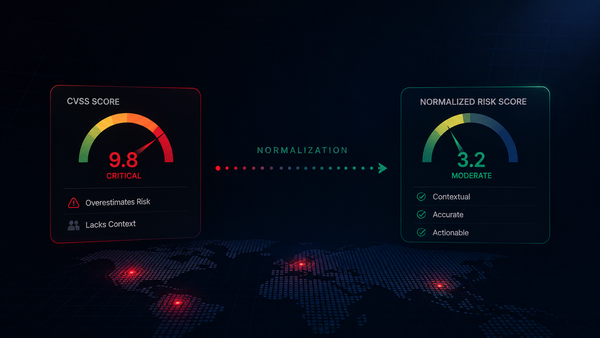
One of the biggest flaws in traditional vulnerability management is that every finding starts to look operationally identical. A critical issue affecting an internal application is often treated the same as a vulnerability impacting a revenue-generating application that serves as the financial backbone of the company. Technically, both may carry high severity scores, but the operational impact, exploitability, and business risk are completely different.
Without organizational context, security teams are forced to prioritize remediation based mostly on scanner output instead of actual operational risk. That creates major inefficiencies. Teams end up chasing vulnerabilities with limited impact while genuinely dangerous exposures remain buried under thousands of findings spread across disconnected environments. Over time, vulnerability management becomes reactive instead of risk-driven, making it difficult for leadership and security operations to identify which business functions are carrying the highest exposure.
How Business-Unit-Driven Vulnerability Management Works
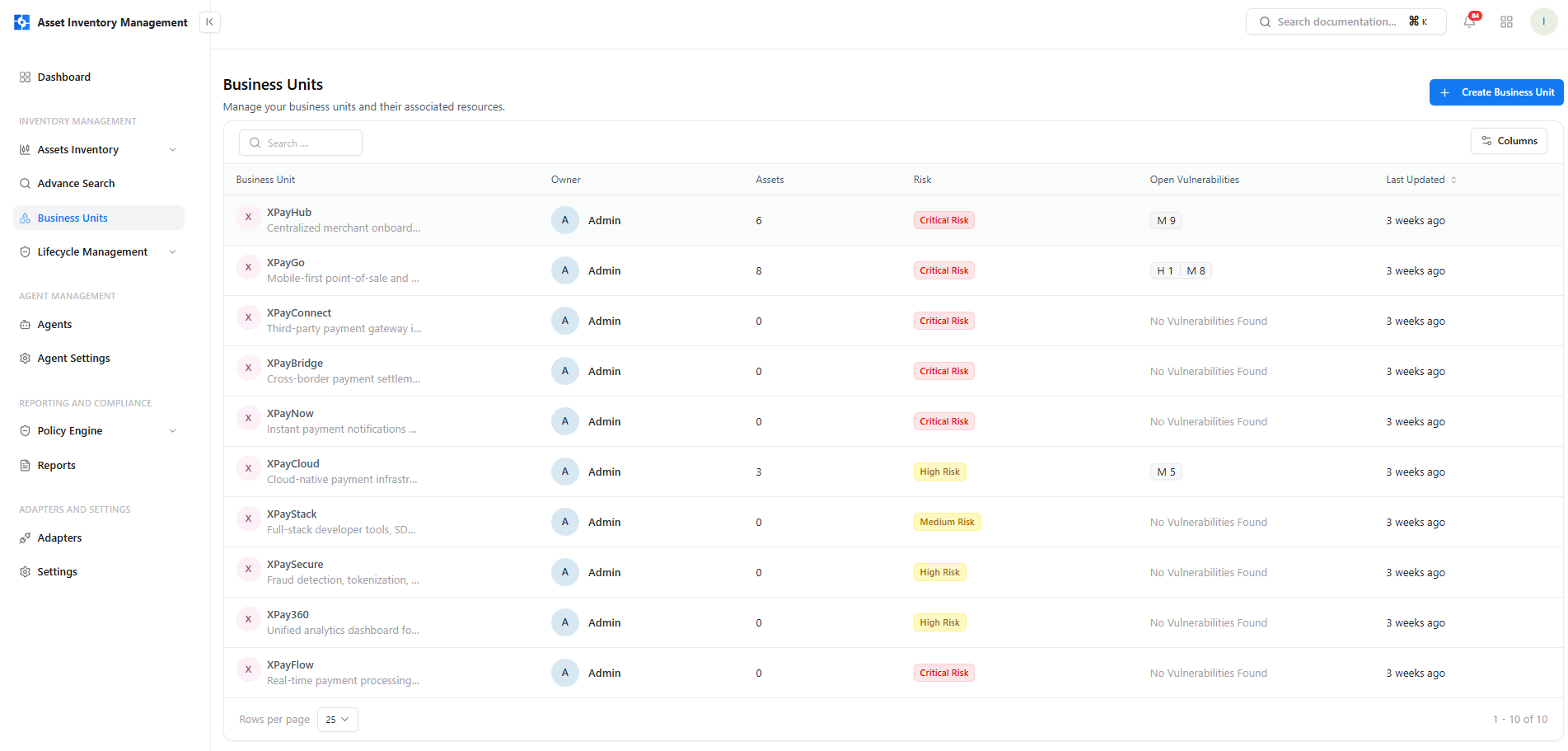
Business-unit-driven vulnerability management introduces a structured ownership layer directly into the remediation workflow. Instead of managing vulnerabilities globally across disconnected environments & assets, findings are mapped to business-applications and people responsible for operating those applications.
Assets such as repositories, cloud infrastructure, APIs, applications, and external services can be associated with specific business units. Vulnerabilities, assessments, and remediation workflows are then centralized around those operational groups, creating clearer accountability and more efficient remediation coordination.
As ownership becomes embedded into the workflow, vulnerability management shifts from fragmented coordination into a far more measurable operational process.
How Does it Work in Snapsec VM
Once vulnerabilities are mapped to business units, prioritization becomes far more intelligent and operationally relevant.
Conclusion
Modern vulnerability management is no longer limited by detection capability. The real challenge is operationalizing remediation across distributed infrastructure, cloud environments, applications, APIs, and business functions without losing visibility into risk priority and remediation efficiency.
Business-unit-driven vulnerability management introduces the operational structure required to solve that problem. By mapping vulnerabilities directly to business context, infrastructure ownership, exploitability, asset criticality, and remediation SLAs, organizations can prioritize risk far more intelligently while improving MTTR, remediation coordination, and long-term exposure reduction across the environment.
This creates a vulnerability management workflow that is not only scalable, but operationally measurable and far more aligned with how modern infrastructure actually operates.