External Risk Prioritization Is Guesswork
Why Security Teams Struggle to Separate Real Threats from Background Noise
Security teams today are not short on visibility.They continuously discover open ports, enumerate subdomains, detect new services, and track constant changes across the external attack surface. Dashboards are busy. Alerts are persistent.
Yet one question consistently blocks action:
Which of these external exposures actually matter right now?
This gap—between finding exposure and understanding real risk—is where many external security programs quietly break down. The issue is not a lack of tools or telemetry. It is a failure of prioritization.
Why External Risk Is Inherently Hard to Prioritize
From the outside, every exposed asset looks dangerous. An admin interface, a staging API, a legacy web app, or a vendor-hosted subdomain all appear as findings in external scans. Most tools detect them, assign a score, and move on.
But attackers don’t think in terms of lists or severity scores.They think in terms of opportunity.
Security teams, meanwhile, are left trying to answer questions that most tools don’t fully support:
Is this exposure actually reachable in a real attack path?
Is it newly introduced, or has it existed without impact for months?
Does it connect to sensitive systems or trusted workflows?
Is there any indication this surface is being actively targeted?
Without those answers, prioritization becomes subjective. And subjective security does not scale.
How This Problem Manifests Inside Organizations
Take a fintech organization with hundreds of internet-facing assets spread across cloud environments, vendors, and customer-facing services.
Within a single week, the security team may observe:
- A newly exposed API endpoint on a subdomain
- A legacy web application flagged with a medium-severity CVE
- A third-party hosted page behaving unexpectedly
- A port briefly opened during deployment testing
Each appears risky in isolation. What’s missing is context.
Which of these expanded the attack surface?
Which connects to critical data flows?
Which aligns with known exploitation patterns?
Which one would an attacker actually choose first?
Without clarity, teams default to caution. Everything becomes “high priority.”And when everything is high priority, nothing truly is.
The outcome is predictable: remediation effort spreads thin, real risk lingers longer than it should, DevOps trust erodes, and leadership sees activity without confidence.
Why Traditional Scoring Models Fall Short
CVSS was never designed to prioritize external risk in modern environments. It measures theoretical vulnerability severity—not operational exploitability.
It does not account for:
- Asset criticality or business role
- Internet reachability and exposure paths
- Authentication and compensating controls
- Ownership and responsibility boundaries
- Whether the issue is actively exploited in the wild
The result is misalignment. Teams fix high-CVSS issues on low-impact assets while exploitable paths across the external perimeter remain open.
This is not a skills problem. It is a correlation problem.
How Attackers Exploit Poor Prioritization
Attackers do not wait for perfect exploits. They look for change.
New endpoints. Forgotten services. Vendor-managed surfaces that no one actively monitors. Weak authentication paths that stayed “medium priority” for too long.
They scan continuously, watching for deltas—not severity scores. When defenders can’t distinguish meaningful exposure from background noise, attackers gain time. And time is usually enough.
What Effective External Risk Prioritization Requires
External risk prioritization stops being guesswork only when three questions can be answered clearly:
a. Is it exploitable?
Based on reachability, configuration, and realistic attack paths—not just CVSS.
b. Is it relevant?
Does it connect to business-critical systems, sensitive data, or trusted workflows?
c. Is it urgent?
Did exposure increase recently, and is there evidence of active threat interest?
If any one of these is missing, prioritization remains reactive.
How Snapsec Solves the Prioritization Gap
Snapsec approaches external risk as a dynamic system rather than a static inventory.
Instead of ranking isolated findings, Snapsec correlates external exposure with asset intelligence, change history, and real-world threat behavior. It tracks how the attack surface evolves over time and highlights risk deltas, not just detections.
By combining attack surface visibility, asset context, vulnerability intelligence, and threat modeling, Snapsec allows teams to prioritize what attackers would exploit first—not what scanners happen to flag.
Security teams stop asking, “Which finding should we fix?” They start answering, “This exposure meaningfully increases risk right now.”
The Business Impact of Getting This Right
When external risk prioritization is grounded in context:
Remediation effort is focused, not scatteredTime-to-risk-reduction dropsDevOps trust improvesLeadership sees measurable risk movement, not alert volume
Most importantly, teams stop spending cycles on noise—and start closing real attack paths.
Final Thought
External risk doesn’t become dangerous simply because it exists. It becomes dangerous when it is misunderstood, misprioritized, or ignored.
Security programs don’t fail because they lack data. They fail when data doesn’t translate into decisions.
Snapsec exists to close that gap - turning external findings into defensible priorities rooted in real-world threat, not theoretical severity.
Because when prioritization is guesswork, attackers don’t need to be clever. They just need to be patient.
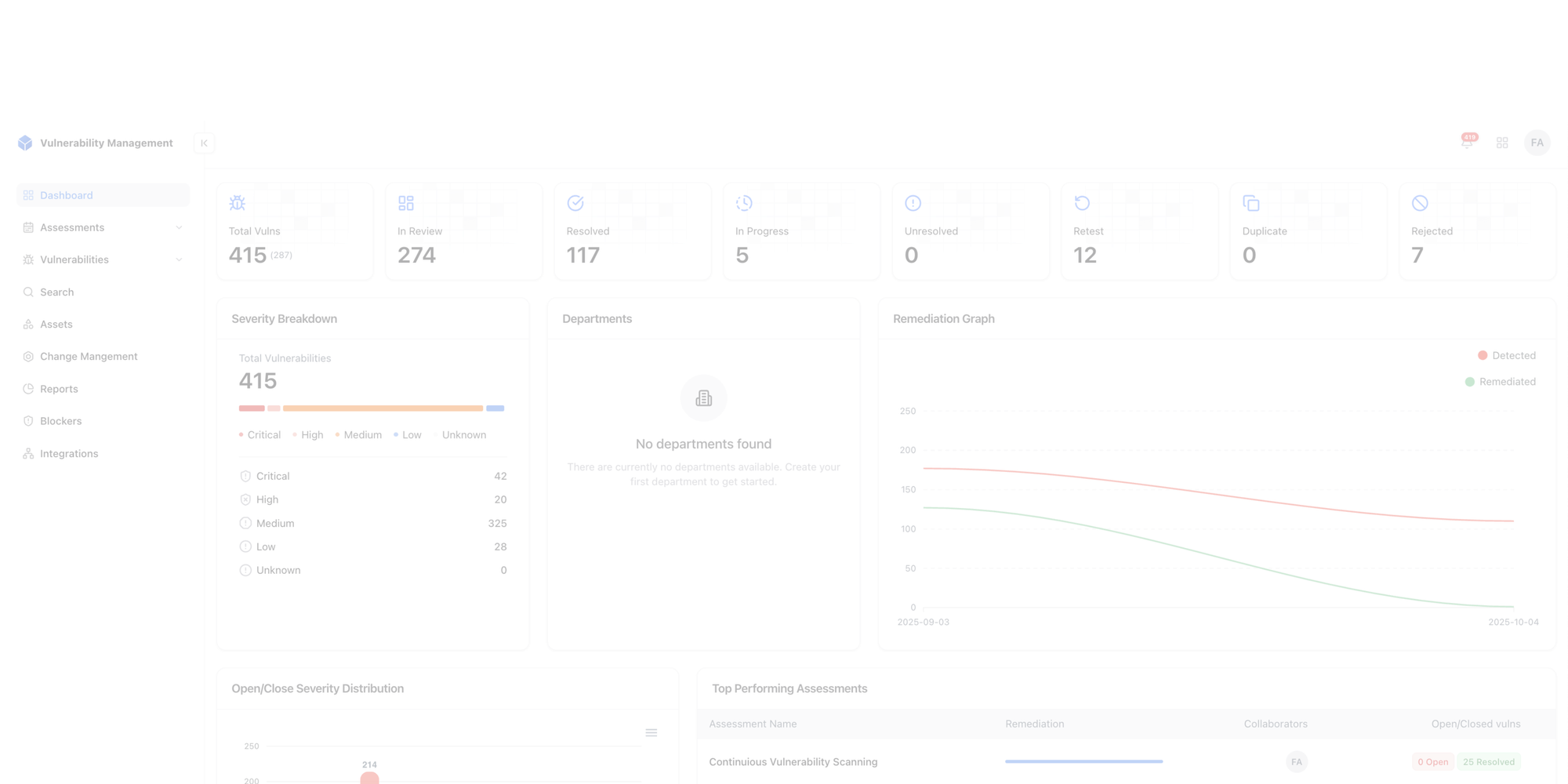
Centralise your Appsec
A single dashboard for visibility, collaboration, and control across your AppSec lifecycle.
Explore Live Demo