VM Program ROI: What Executives Need to Know
The boardroom rarely sees the chaos inside a vulnerability queue. They don’t see the 10,000+ open findings, the weekly fire-drills, or the pressure to “patch faster.”
What leadership does see is risk, cost, and business impact.
And that is exactly where most Vulnerability Management (VM) programs struggle:
they work hard, but they don’t always show their return on investment.
This blog is about understanding what VM ROI actually means — and how security teams can finally communicate it in a language executives care about.
Why VM ROI Is Hard to Measure
Most VM programs track operational outputs:
- Number of scans
- Number of vulnerabilities detected
- Number of tickets closed
- Patch cycle time
But executives don’t make decisions based on volume.
They make decisions on:
- risk reduced
- cost avoided
- exposure minimized
- business continuity preserved
And unlike other security initiatives, VM ROI is mostly preventive.
It’s about the breach that never happened, the incident cost you avoided, and the downtime you prevented.
This makes it invisible unless you quantify it deliberately.
The Real Cost of Poor VM (and Why ROI Matters)
Research across the industry shows consistent patterns:
1. Breach Costs
- Average breach cost globally: $4.45M (IBM 2024)
- 41% of breaches exploited known, unpatched vulnerabilities
A single missed patch can outweigh a year’s VM budget.
2. Downtime Costs
For enterprises:
- Average downtime: $100k–300k per hour
- Exploitable vulnerabilities are a major cause of unplanned outages
Every hour of prevention buys days of operational stability.
3. Operational Inefficiency Costs
Without a structured VM program, teams waste resources:
- Manual correlation
- Spreadsheet-driven prioritization
- Patch cycles based on guesswork, not threat intel
A mature VM program reduces this waste dramatically.
What Executives Actually Need to See
Executives don’t want to know how many vulnerabilities you fixed.
They want to know which risks you eliminated and what impact that had.
Here are the ROI indicators leadership cares about most:
1. Reduction in Time-to-Remediate (TTR)
Faster remediation = lower exposure windows.
Executives want to see:
- Average TTR across business units
- TTR for critical vulnerabilities
- TTR improvement quarter-over-quarter
2. Change in Attack Surface Exposure
Leaders respond well to visuals:
- % of assets with exploitable vulnerabilities
- % of internet-exposed assets with high-risk CVEs
- % of shadow/unknown assets identified
Attack surface shrinkage is quantifiable ROI.
3. Reduction in Exploitability Risk
Move beyond CVSS:
- How many vulnerabilities had active exploits?
- How many were fixed before exploitation windows opened?
- How many aligned with CISA KEV or threat intel sources?
Executives understand “we closed these 41 actively exploited vulnerabilities before attackers reached them.”
4. Cost Avoidance Projections
This is where VM ROI becomes powerful:
- Cost avoided per prevented incident
- Cost avoided by reducing downtime probability
- Cost avoided through early patching of high-impact assets
Example:
Fixing a $20k patch prevents a $4M breach.
That is real ROI.
How to Present VM ROI to Executives
1. Speak in Business Outcomes, Not Technical Metrics
Replace:
“We remediated 3,200 vulnerabilities this quarter.”
With:
“We reduced the organization’s exploited-attack surface by 47%.”
2. Show Trend Lines, Not Snapshots
Snapshots show chaos.
Trends show progress.
Offer:
- 3-month exposure trends
- Risk scores dropping
- SLA compliance improving
- Remediation times shrinking
Executives reward trajectory.
3. Tie VM Metrics to Business Risk Scenarios
Example:
“This vulnerability exposed our payment system; fixing it reduced potential outage impact by $300k per hour.”
Make the connection explicit.
Where SnapSec Suite Supports ROI
Modern platforms like SnapSec Suite help teams demonstrate ROI more clearly because they don’t just collect vulnerability data they correlate it with assets, ownership, threat intel, remediation activity, and SLA performance.
This allows teams to show leadership:
- exposure reduction over time
- fix velocity by department
- impact of prioritizing exploited vulnerabilities
- measurable attack surface shrinkage
Instead of “we fixed many things,” the organization sees
“here’s how security investment reduced real-world business risk.”
Final Thought
A VM program isn’t valuable because it patches fast —
it’s valuable because it prevents loss.
Executives don’t want noise.
They want clarity.
They want measurable outcomes.
They want predictable risk reduction.
Show them the numbers that matter, and suddenly the VM program stops being a cost center —
and becomes a strategic business advantage.
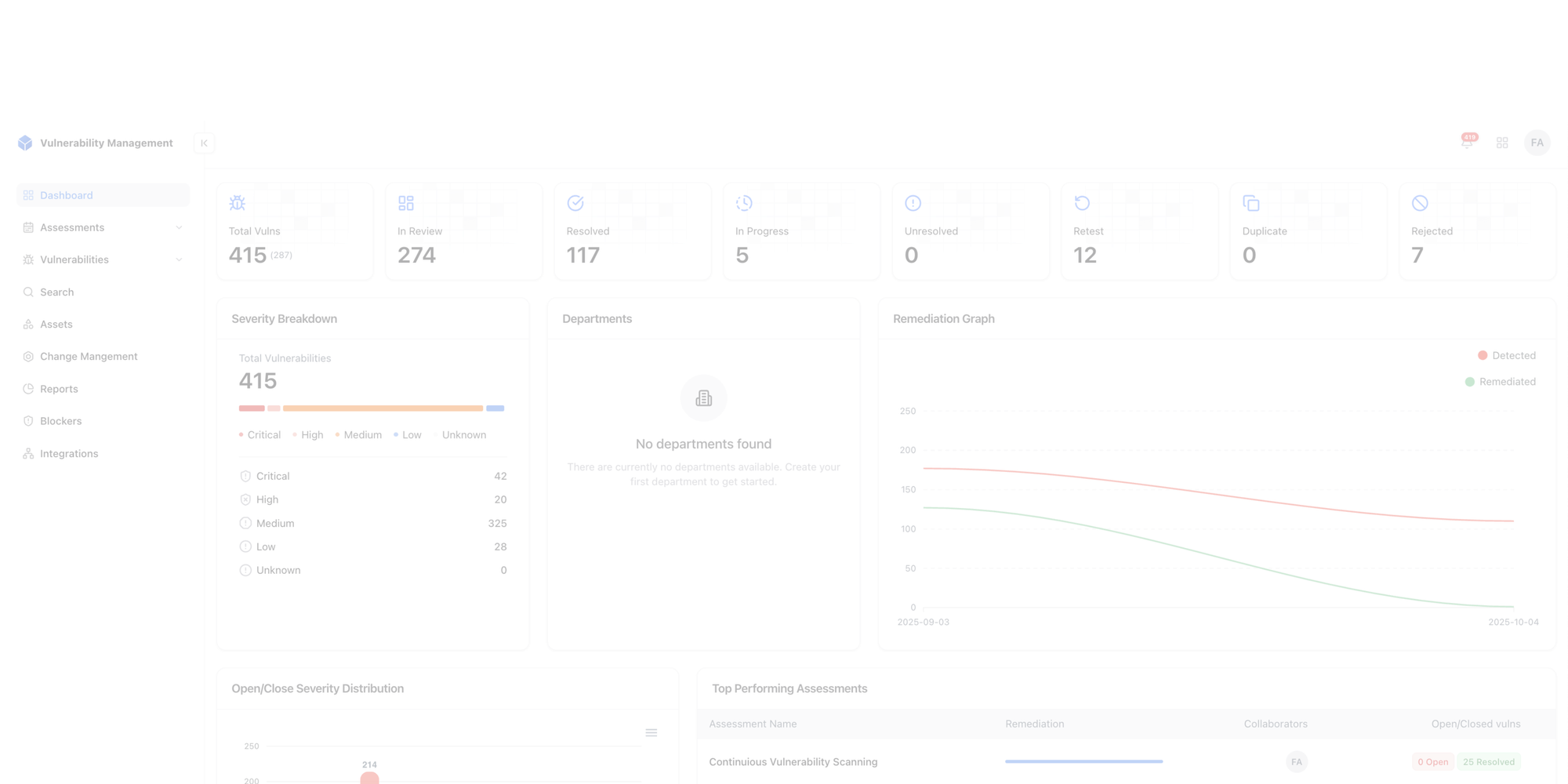
Centralise your Appsec
A single dashboard for visibility, collaboration, and control across your AppSec lifecycle.
Explore Live Demo