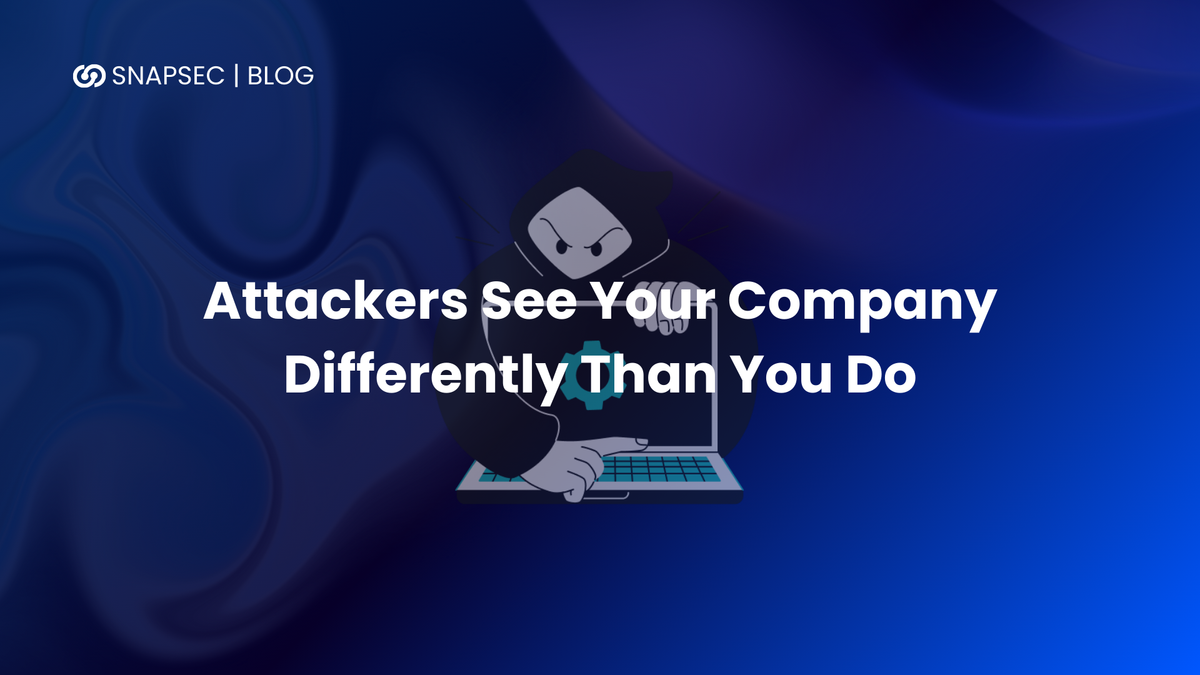
Attackers See Your Company Differently Than You Do
Most organizations believe they understand their own infrastructure. They know their production environments, their internal networks, their approved services, and their deployed applications. Architecture diagrams exist. Asset lists exist. Ownership is documented-at least internally.
Attackers see none of that. They do not start with your org chart, your CMDB, or your internal diagrams. They start with the internet. And from the internet, your company looks very different.
This gap between how organizations perceive themselves and how attackers actually observe them is where most modern breaches begin.
The Attacker’s Starting Point Is Not Your Network - It’s Your Identity
Attackers do not begin by probing firewalls or guessing credentials. They begin with identifiers that anchor your organization to the public internet.
Domains are the primary identity layer.
A company’s root domain becomes the seed from which everything else is discovered. From that single identifier, attackers begin expanding outward, mapping infrastructure, services, vendors, and forgotten assets that no internal system fully tracks.
From an attacker’s perspective, your organization is not a network. It is a namespace.
DNS Is Not Just Naming - It Is Infrastructure Disclosure
DNS is one of the most information-dense systems exposed to attackers, and it is almost always underestimated.
Through DNS alone, attackers can infer:
- Cloud providers and hosting platforms
- Third-party vendors and SaaS dependencies
- Geographic distribution of infrastructure
- Environment separation (prod, staging, dev, test)
- Legacy services that were never retired
Zone walking is rarely possible today, but enumeration does not require it. Passive DNS databases, certificate transparency logs, historical records, and brute-force techniques allow attackers to reconstruct years of infrastructure evolution.
Every DNS record tells a story. Most organizations never read it the way attackers do.
Subdomain Enumeration Reveals More Than Just Services
Subdomain enumeration is not about finding “more URLs.” It is about identifying operational patterns and security posture.
Attackers enumerate subdomains to understand:
- How environments are structured
- Which naming conventions signal sensitivity
- Where automation is used
- Where humans made manual changes
Subdomains like admin, api, internal, uploads, dev, test, beta, and backup are not just names. They are intent leaks.
Even when properly authenticated, these endpoints often expose behavior differences, error messages, version information, or integration logic that becomes valuable in later stages of attack planning.
The attacker is not asking “Is this vulnerable?” yet. They are asking “What does this tell me about how this company builds systems?”
Certificate Transparency Is a Timeline of Your Infrastructure Mistakes
TLS certificates are often treated as purely defensive controls. To attackers, they are reconnaissance gold.
Certificate transparency logs expose:
- New services before they are fully secured
- Short-lived environments that were assumed private
- Vendor-hosted assets tied to your domain
- Internal naming patterns leaked externally
Every certificate issuance is a signal. Attackers monitor CT logs continuously because they reveal change - and change is where exploitation happens.
Many real-world compromises begin within hours of a new certificate appearing, long before internal monitoring detects exposure.
Service Fingerprinting Turns Exposure Into Capability Mapping
Once endpoints are identified, attackers fingerprint services to understand what is actually running.
This includes protocol behavior, headers, error responses, TLS parameters, and response timing. These signals allow attackers to infer:
- Application frameworks
- Middleware versions
- Cloud-native services
- Authentication mechanisms
- Reverse proxies and WAF behavior
This is not vulnerability scanning yet. This is capability mapping. By the time exploitation begins, attackers already know what tools will work and which will fail.
APIs Are the Quietest - and Richest - Attack Surface
APIs rarely look dangerous in isolation. They are designed to be consumed programmatically and often lack the visual indicators that make web apps feel “exposed.”
Attackers love APIs because:
- They are highly structured
- They often expose business
- They rely heavily on trust assumptions logic
- They change frequently
Enumeration of API endpoints often reveals undocumented routes, deprecated versions, and internal-only functions that were never meant to be internet-facing.
From the attacker’s view, APIs are not interfaces. They are workflows.
Vendors Extend Your Attack Surface Without Asking Permission
One of the biggest differences between internal and attacker views is vendor exposure. Internally, vendors are contracts and integrations. Externally, vendors are attack surface multipliers. DNS delegations, callback endpoints, hosted portals, analytics tools, support platforms, and marketing infrastructure all introduce externally reachable assets under your brand.
Attackers do not distinguish between “your” infrastructure and “your vendor’s” infrastructure. If it resolves under your domain, it belongs to your attack surface.
Most organizations cannot list these assets accurately. Attackers can.
Change Is the Signal Attackers Care About Most
Static infrastructure is boring. Change is an opportunity.
Attackers continuously monitor for:
- New subdomains appearing
- Ports opening
- Authentication behavior shifting
- Services becoming reachable
- Certificates being reissued
These deltas often represent misconfigurations, rushed deployments, or incomplete security controls. Internal tools often treat change as noise. Attackers treat it as a priority queue.
Why Internal Visibility Does Not Translate to External Understanding
Inside the organization, security teams operate with assumptions:
- Assets are known
- Ownership exists
- Controls are enforced
- Monitoring is active
Attackers assume none of this.
They assume assets are forgotten, ownership is unclear, controls are inconsistent, and monitoring is reactive. Too often, they are right. This is not because teams are incompetent. It is because internal security tooling was never designed to answer the attacker’s first question:
“What does this company look like from the internet right now?”
Where Most Organizations Lose the Advantage
By the time internal tools detect malicious activity, attackers have already:
- Mapped the environment
- Identified weak paths
- Chosen targets
- Tested assumptions
The fight begins too late. This is why breaches often feel sudden internally while attackers describe them as methodical and predictable.
Why Snapsec Starts Where Attackers Start
Snapsec is built on a simple premise:You cannot defend what you do not see the way attackers see it.
Instead of starting from internal assets and working outward, Snapsec starts from the internet and works inward, continuously discovering, validating, and tracking everything an attacker can reach.
This includes:
- Live asset discovery across domains, cloud, APIs, and vendors
- Historical change tracking to detect meaningful exposure shifts
- Reachability validation to eliminate false positives
- Contextual risk analysis grounded in attacker behavior
Snapsec does not ask, “What did we deploy?” It asks, “What can be reached?”
The Strategic Shift This Enables
When organizations adopt an attacker-aligned view of their infrastructure, several things change immediately.
- Security discussions become factual instead of speculative.
- Prioritization becomes defensible instead of subjective
- DevOps collaboration improves because context is clear.
- Leadership sees exposure trends, not incident summaries.
Most importantly, security stops reacting to breaches and starts reducing opportunity.
Final Thought
Attackers do not see your architecture diagrams, your policies, or your intentions. They see DNS records, certificates, endpoints, response behavior, and change. They see what is reachable, not what is approved.
Organizations that defend only the internal view will always be one step behind. Organizations that understand how attackers see them regain control before exploitation begins.Security does not start at the firewall. It starts at the internet edge - exactly where attackers begin.
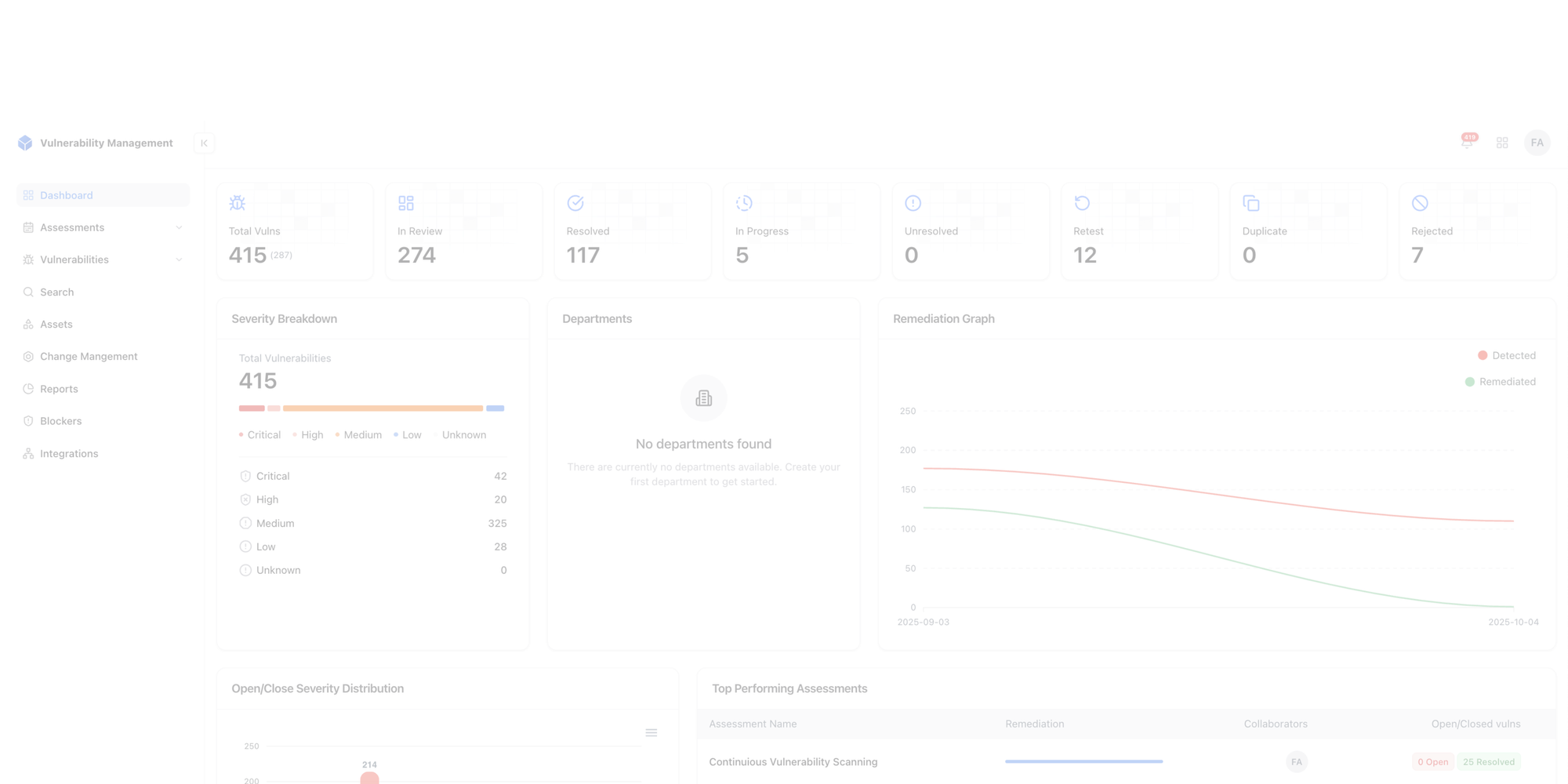
Centralise your Appsec
A single dashboard for visibility, collaboration, and control across your AppSec lifecycle.
Explore Live Demo